Othala Rune: meaning and message
Rune ᛟ of the Elder Futhark
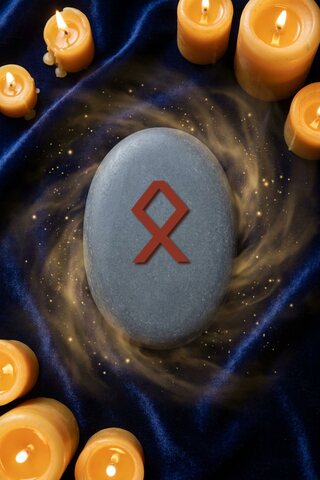
Othala
Did Othala come up in a consultation, or do you want to see which runes are with you today? Get your free rune reading with a personalized interpretation.
Consult the runesOthala is the rune of inheritance, home and roots, and depending on the ordering followed it either closes the Elder Futhark or shares that honor with Dagaz. It speaks of everything you receive from those who came before: the family house, the estate, but also the values, the talents and the stories that run through your blood. It is the rune of the place you belong to.
Its name comes from Proto-Germanic ōthalan, inherited land or property, the concept that gave rise to words like the Norwegian odel, the ancestral right over family land. Its glyph combines the diamond of Ingwaz —the seed— with two strokes that anchor it to the ground: potential made estate, the inherited that asks to be guarded and passed on.
Meaning of Othala
- Inheritance, material and spiritual
- Home and sense of belonging
- Roots, family and lineage
- Estate that is cared for and passed on
- Tradition as a source of strength
Othala in love
In love, Othala speaks of building a home in the broadest sense: a relationship that becomes a refuge, plans for shared housing, integration into the other's family or family reconciliations around the couple. It may also signal that inherited patterns —ways of loving learned at home— are influencing your relationship: recognizing them gives you the freedom to keep those that nourish and release those that weigh you down. If you are single, it suggests that lasting love will come through close and trusted circles. Shared traditions —celebrations, meals, customs— can become the silent cement of the relationship.
In work and money
Professionally, Othala favors family businesses, handed-down trades and any work that rests on a solid base: accumulated experience, reputation, familiar territory. It is not a rune of leaps into the void but of growing from what you already possess. With money it is one of the estate runes par excellence: inheritances, properties, buying and selling a home, long-term investments. It advises protecting what you have accumulated, documenting property matters well and thinking about what you will leave to your own. If you are considering starting a venture, do it on familiar ground: your track record and your name are worth more than you think.
And if it comes up reversed?
Reversed Othala warns of conflicts with the inherited: family disputes over goods, excessive attachment to the material, or traditions that have become a cage rather than a root. It may also signal rootlessness, that feeling of belonging nowhere. The work it proposes is discernment: which part of your inheritance sustains you and which part chains you. Putting family agreements in writing, however uncomfortable, prevents far deeper wounds.
The counsel of Othala
Honor your roots without becoming their prisoner: you are the keeper of what you received and the author of what you will pass on. Consult those matters of family and estate calmly with the 7-rune reading, or start with a 3-rune reading if you are looking for quick guidance.
Frequently asked questions about Othala
¿Qué significa la runa Othala?
Othala es la runa de la herencia, el hogar y las raíces: representa lo que se recibe de la familia —bienes, valores, talentos— y el deber de custodiarlo y transmitirlo. Simboliza la pertenencia.
¿Qué significa Othala en el amor?
Habla de construir un hogar: relaciones refugio, planes de vivienda, integración familiar. También invita a revisar patrones afectivos heredados para quedarse con los que nutren y soltar los que pesan.
¿Othala anuncia herencias o temas de vivienda?
Es la runa patrimonial por excelencia: puede señalar herencias, compraventa de propiedades e inversiones a largo plazo. Aconseja documentar bien los asuntos de propiedad y proteger lo acumulado.
¿Qué indica Othala invertida?
Advierte de disputas familiares por bienes, apego excesivo a lo material, tradiciones que aprisionan o sensación de desarraigo. Propone discernir qué herencia sostiene y cuál encadena.